
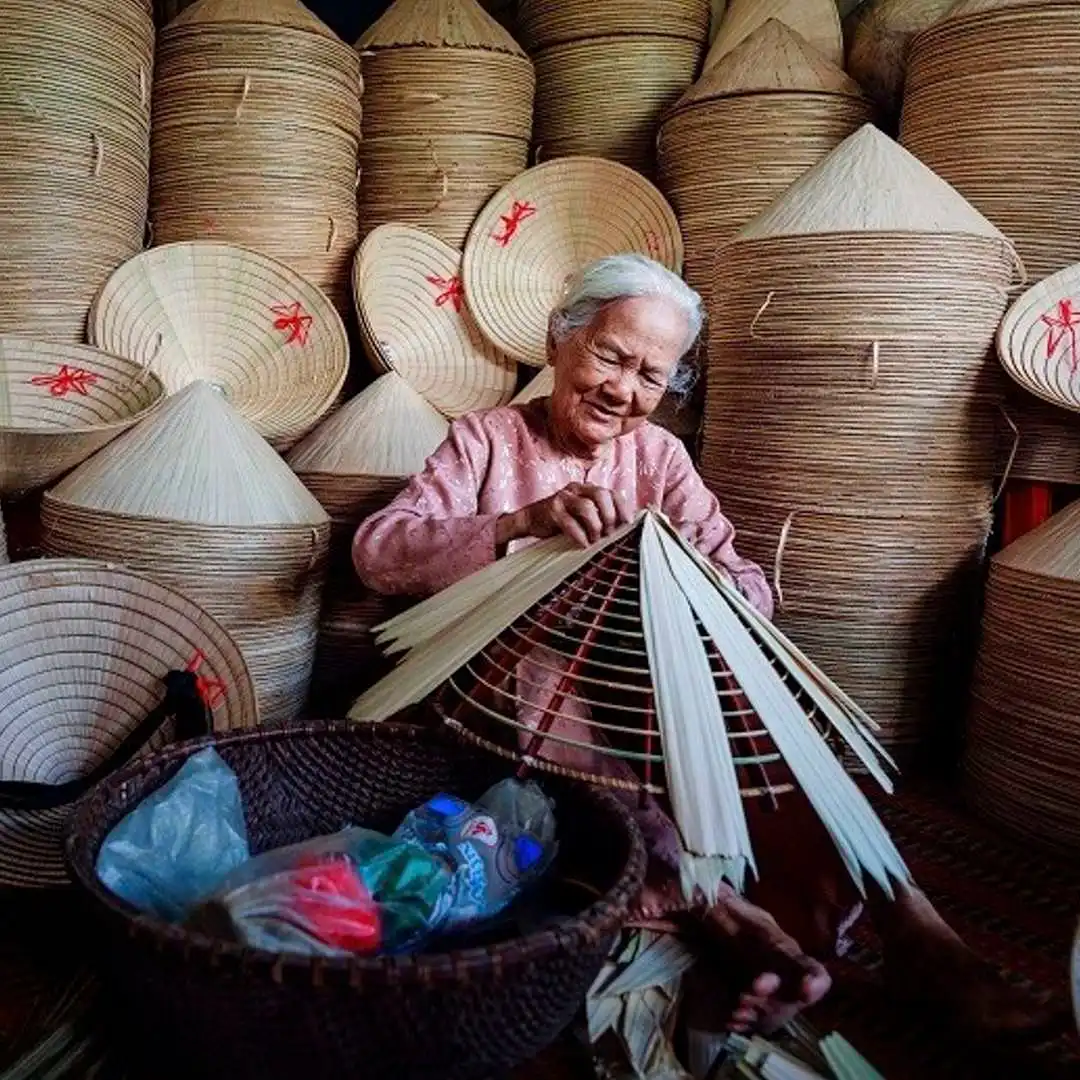
The Timeless Craft of Tay Ho: Preserving Vietnam’s Heritage Through Conical Hat Making
Hue, the former capital of Vietnam and the seat of the Nguyen Dynasty from 1802 to 1883, attracts both Vietnamese and foreign tourists due to its historical significance. The city of Hue is abundant in cultural heritage, and one of its notable attractions is the Tay Ho village located on its outskirts. This village serves as a living testament to the enduring spirit of Vietnamese culture.
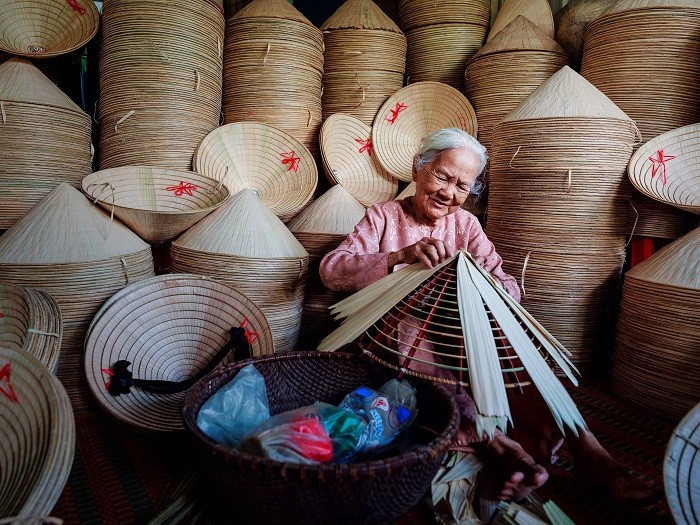
Tay Ho village is renowned for its exquisite conical hats, locally known as “Non La.” This particular village is known for crafting “poem” conical hats from two layers of coconut leaves, creating a translucent and elegant paper finish. These hats symbolize the fusion of tradition, craftsmanship, and cultural identity that has been passed down through generations in Vietnam. The village exemplifies the blending of these elements, creating a unique cultural experience for visitors.
At the core of Tay Ho village lies the people’s deep respect for traditional skills and values, which is reflected in the crafts produced there. The crafts produced in this village hold great significance in Vietnam’s rich tapestry of handicraft traditions. The village’s contribution to preserving and promoting these traditions cannot be underestimated.
Overall, Hue and its surrounding areas, such as Tay Ho village, offer a captivating glimpse into Vietnam’s cultural history. The combination of historical landmarks and living cultural heritage makes it a must-visit destination for both locals and tourists seeking to immerse themselves in the beauty and depth of Vietnamese culture.
The Soul of Tay Ho: More Than Just a Conical Hat
There’s no doubt that the conical hat has cemented itself as a quintessential emblem of Vietnam. At first glance, the conical hat may appear as a simple accessory, a symbol of traditional Vietnamese attire. Yet, to the artisans of Tay Ho, each hat tells a story, representing the essence of their homeland and embodying the artistry of its creators.
The process of crafting these hats is deeply rooted in tradition, utilizing natural materials such as bamboo, palm leaves, and silk threads for more intricate designs. These materials are carefully chosen not only for their availability but also for their symbolic connection to the Vietnamese landscape, symbolizing the harmonious relationship between humans and nature. Creating a single conical hat requires immense dedication and patience. Artisans often work in the tranquil surroundings of their village, meticulously weaving and shaping each hat by hand. The precision required to ensure the uniformity of the bamboo frame, the delicate placement of the leaves, and the finesse in stitching them together is a skill that has been honed since childhood.

This commitment to craftsmanship exemplifies the cultural values of Tay Ho, where the pursuit of excellence in one’s work is seen as a reflection of personal integrity and a deep respect for one’s heritage.
A Legacy Woven Through Time
Tay Ho’s conical hat making is more than just a skill, it is a heritage – a cultural artifact that has stood the test of time. These hats serve not only as a shield against the elements, but also as a symbol of elegance and grace, especially for Vietnamese women. Despite being a lasting cultural symbol, those who have experienced Vietnam firsthand know that these hats are also a practical item used in everyday life to protect against the harsh sun. The intricate patterns, often concealed within the layers of the hat, only reveal themselves when illuminated by light. This distinctive feature not only showcases the creativity of the artisans, but also reflects the depth of Vietnamese cultural narratives.
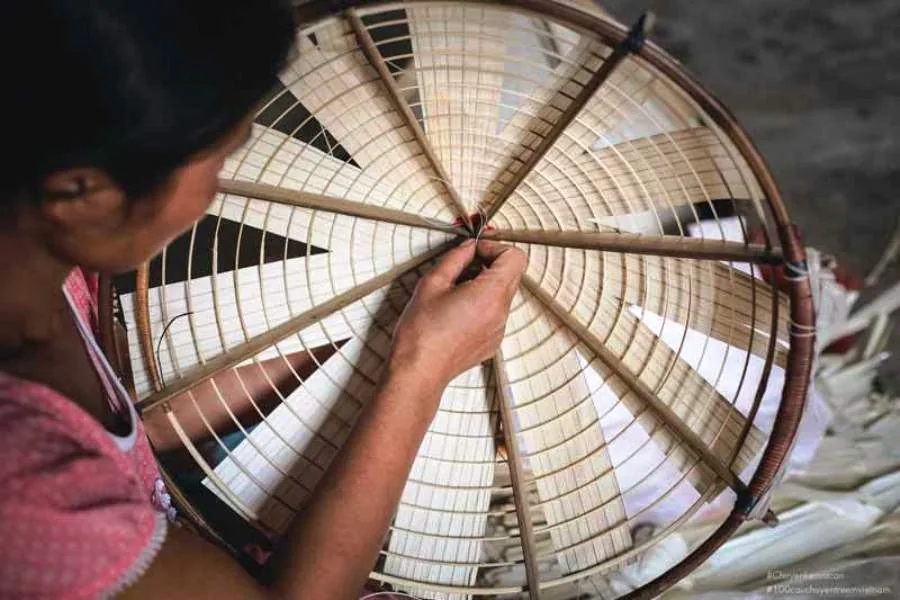
The significance of Tay Ho in Vietnam’s handicraft industry cannot be emphasized enough. In an era of globalization and modernization, villages like Tay Ho play a crucial role in preserving culture. They serve as reminders of the importance of maintaining a tangible connection to our past, even as we navigate the complexities of the contemporary world. The conical hats of Tay Ho are not mere commodities; they are symbols of Vietnam’s resilience, its harmonious relationship with nature, and the enduring spirit of its people.
Challenges and Triumphs: The Road Ahead for Tay Ho
Despite the cultural richness it possesses, Tay Ho, like many other traditional craft villages, is confronted with significant challenges in the modern era. The emergence of mass-produced goods, evolving fashion trends, and the declining interest of the younger generation in traditional crafts pose substantial threats to the village’s sustainability. However, the artisans of Tay Ho remain undeterred and are actively adapting to these challenges by finding innovative ways to preserve their ancestral techniques.

One notable approach taken by some artisans is the incorporation of modern designs and functionalities into their hats, making them more appealing to a wider audience, including tourists and fashion enthusiasts. This strategic move not only helps to attract a broader customer base but also ensures the preservation of traditional craftsmanship. Additionally, certain partnering businesses have recognized the potential of marketing these hats as decorative pieces, capitalizing on their natural handmade beauty and appealing to a wider market.

Moreover, Tay Ho village is gradually gaining recognition as a cultural heritage site, attracting visitors who are eager to witness the art of conical hat making firsthand. As tourism in Vietnam continues to flourish, this presents a promising opportunity for the locals of Tay Ho. Tourism not only serves as a vital source of income but also provides a platform to educate and inspire others about the value of traditional crafts. Through workshops, demonstrations, and cultural exchanges, the artisans of Tay Ho are not only preserving their heritage but also sharing it with the world.
The Enduring Legacy of Tay Ho

Tay Ho conical hat making village not only showcases Vietnam’s handicraft industry but also embodies the rich cultural heritage of the country. Each hat carries traditional values that emphasize harmony with nature, meticulous craftsmanship, and the passing down of cultural knowledge through the ages. In today’s globalized world, Tay Ho’s story reminds us of the significance of preserving our cultural roots. Our traditions define who we are, and our crafts reflect the timeless legacy of our forefathers. Tay Ho stands as a symbol of cultural strength, guiding the way for generations to come.